Courses in Environmental Sustainability – 2 points
GEOG 1100: Introduction to Environmental Studies and Sustainability – Winter 2025
In the second semester of my third year, I completed GEOG 1100, Introduction to Environmental Studies and Sustainability. Through this course, I was able to learn about the geographical effects of climate change and concepts such as food webs and nutrient cycles. I learned the history of the environmental movement and how society’s views of climate change have shifted between anthropocentric to ecocentric perspectives. From these ideas, I have developed a greater appreciation for how we are meant to interact with nature as something not created for human use, but as something we must treat with respect as its own entity. As part of the course, I gave an oral presentation on sustainable development, looking at sustainable transportation in Nanaimo, British Columbia specifically.
BIOL 2160: Introductory Microbiology – Fall 2023
In the first semester of my second year, I completed BIOL 2160, Introductory Microbiology. This course taught me about how interconnected our ecosystems are, from the tallest trees to the tinniest microbes. Throughout the course, several “Microbes in the News” assignments were completed which taught me how to summarize and connect news articles to concepts being taught in lecture. Many of the articles discussed microbes and their potential uses in environmental sustainability. The concepts of bioremediation and microbe driven waste management were also introduced which reinforced the importance of working with nature to help restore the environment we all depend on. This directly supported my undergraduate research working with bacteria that break down environmentally concerning perfluoroalkyl and polyfluoroalkyl substances (PFAS).
Employment Related Activity – Green Jobs – 5 points
NSERC USRA – Summer 2025
Continued work in collaboration with Dr. Jonathan Van Hamme to investigate the ability of Gordonia sp. strain NB4-1Y to degrade environmentally concerning perfluoroalkyl and polyfluoroalkyl substances (PFAS). A time course experiment was conducted with the end goal of measuring gene expression over time when NB4-1Y is provided with various sulfur sources including PFAS. Gene expression will be measured using digital polymerase chain reaction (dPCR) primer and probe assays I developed. This work will be published and contribute to the rapidly growing knowledge base on bioremediation attempts for PFAS contaminated sites. PFAS have piqued interest in scientific communities across the globe as its dangers have become more well known to the public, therefore research like mine is important and relevant.
NSERC USRA – Summer 2024
I continued work with Dr. Jonathan Van Hamme regarding environmentally concerning PFAS and PFAS degrading bacteria, specifically NB4-1Y and JVH1. The work involved many independently organized time course experiments where PFAS degrading bacteria were grown using various sulphur sources. The methods developed were used later during my directed study and honours project. Additionally, I sequenced the complete genome for Rhodococcus sp. JVH1 and published it on the National Centre for Biotechnology Information database. Through my research experience, I’ve learned the importance of bioremediation and how reversing environmental damage already done is just as important as preventing damage yet to come.
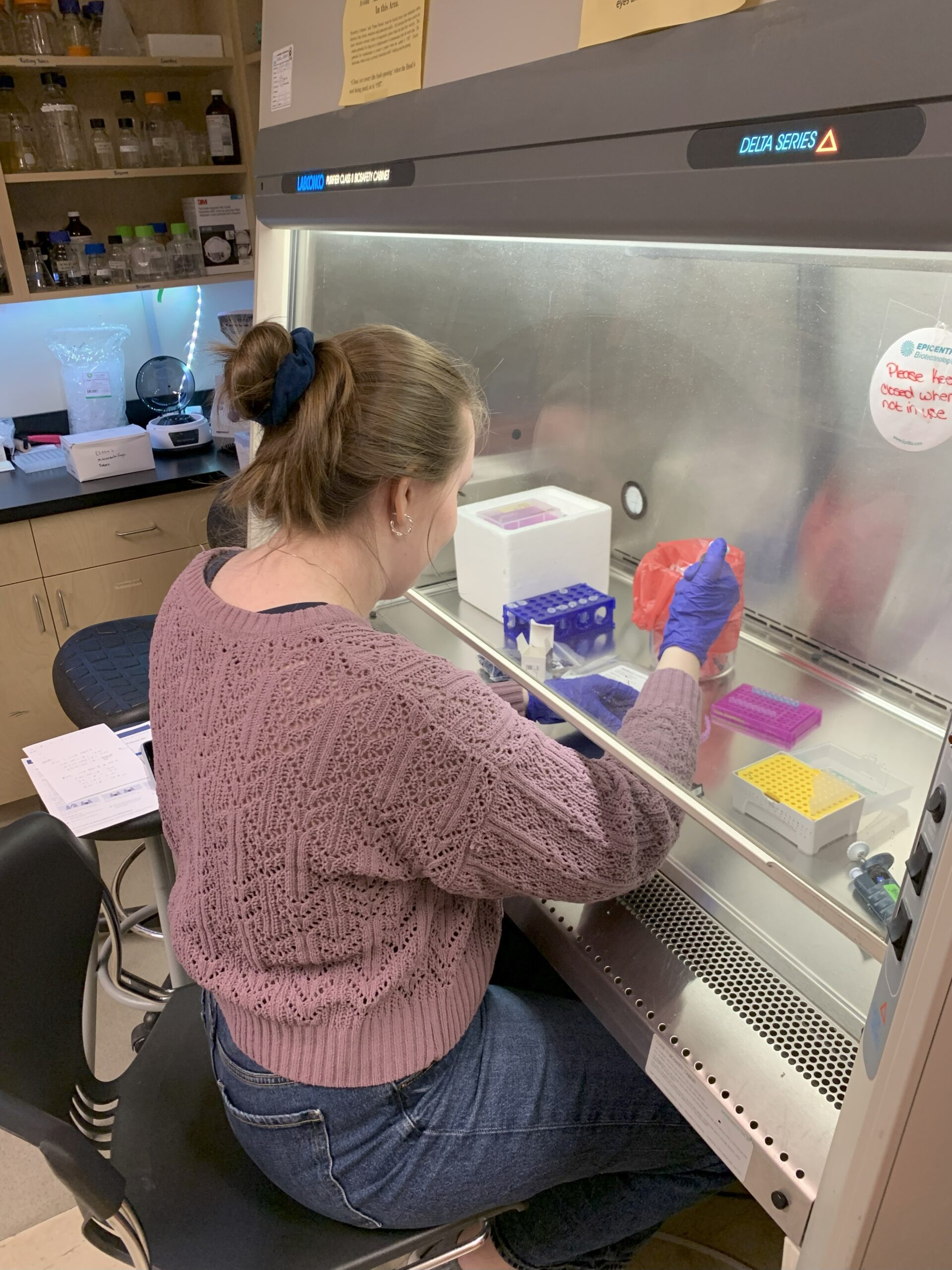
Working in the biosafety cabinet to prepare a dPCR plate for analysis (Summer 2025).
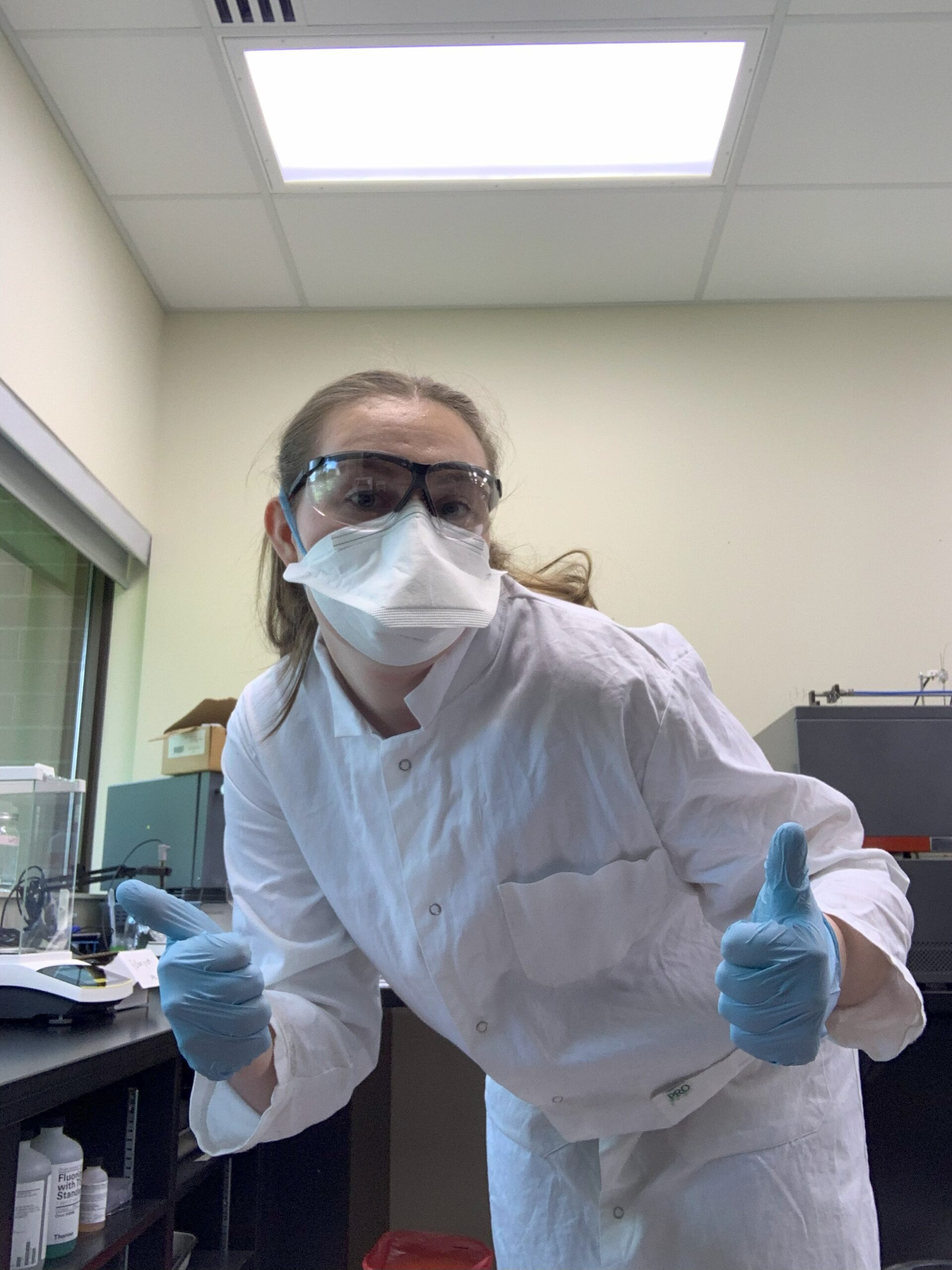
Personal protective equipment worn while working with PFAS (Summer 2024).
Environmental Organization – 5 points
Westsyde Secondary Climate Action Club – Fall 2021 and Winter 2022
Was a founding member of the Westsyde Secondary Climate Action Club. The club strived to create positive, sustainable change and focused on addressing climate change issues within our school and community through education and action. After being designated as the social media coordinator of our club, I focused on educating the student body about climate change through informational advertisements. Reaching out to similar clubs in hopes to collaborate on future projects was another one of my responsibilities. Connecting with other groups outside of our immediate community offered opportunities to work on a greater scale towards the common goal of educating others and putting into practice a more sustainable approach to living. The club also participated in and organized many events such as the Kamloops Film Festival’s first ever Sustainability Evening, tree planting on campus, and a school wide event called Earth Week. As a member I learned that impactful change cannot be achieved through the individual: it takes a collective.
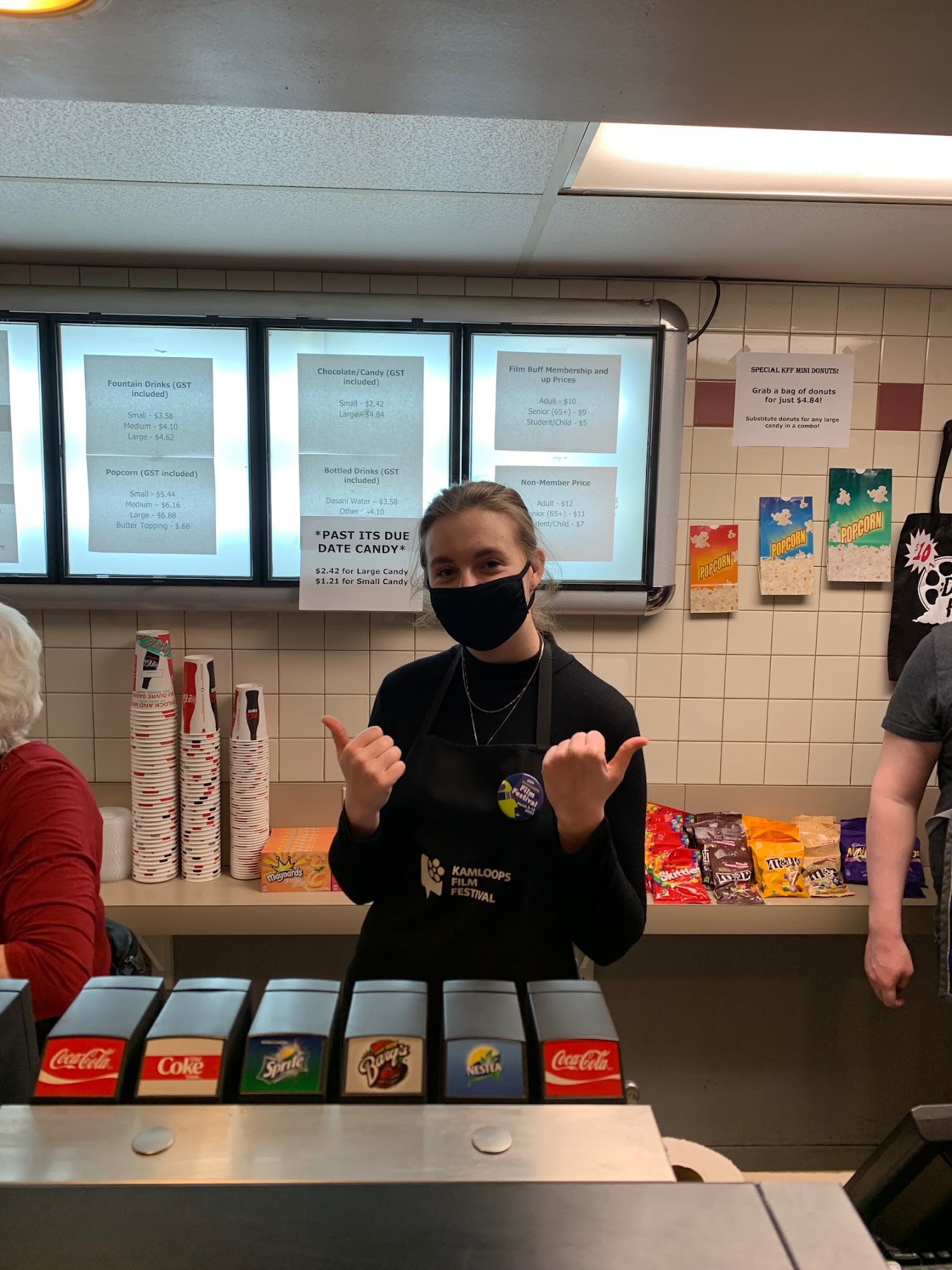
Working the concession at the Kamloops Film Festival’s Sustainability Evening.
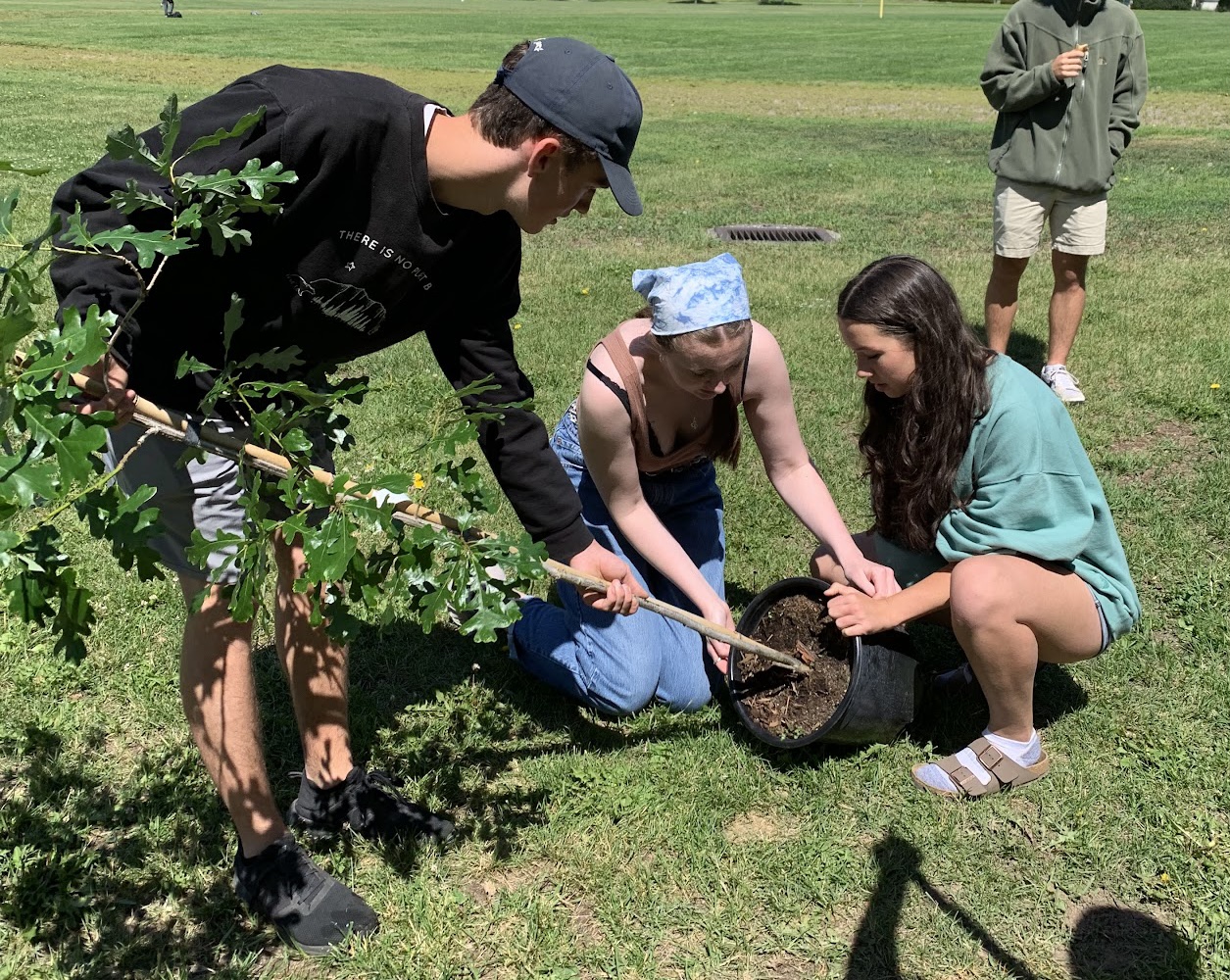
Planting a tree on campus.
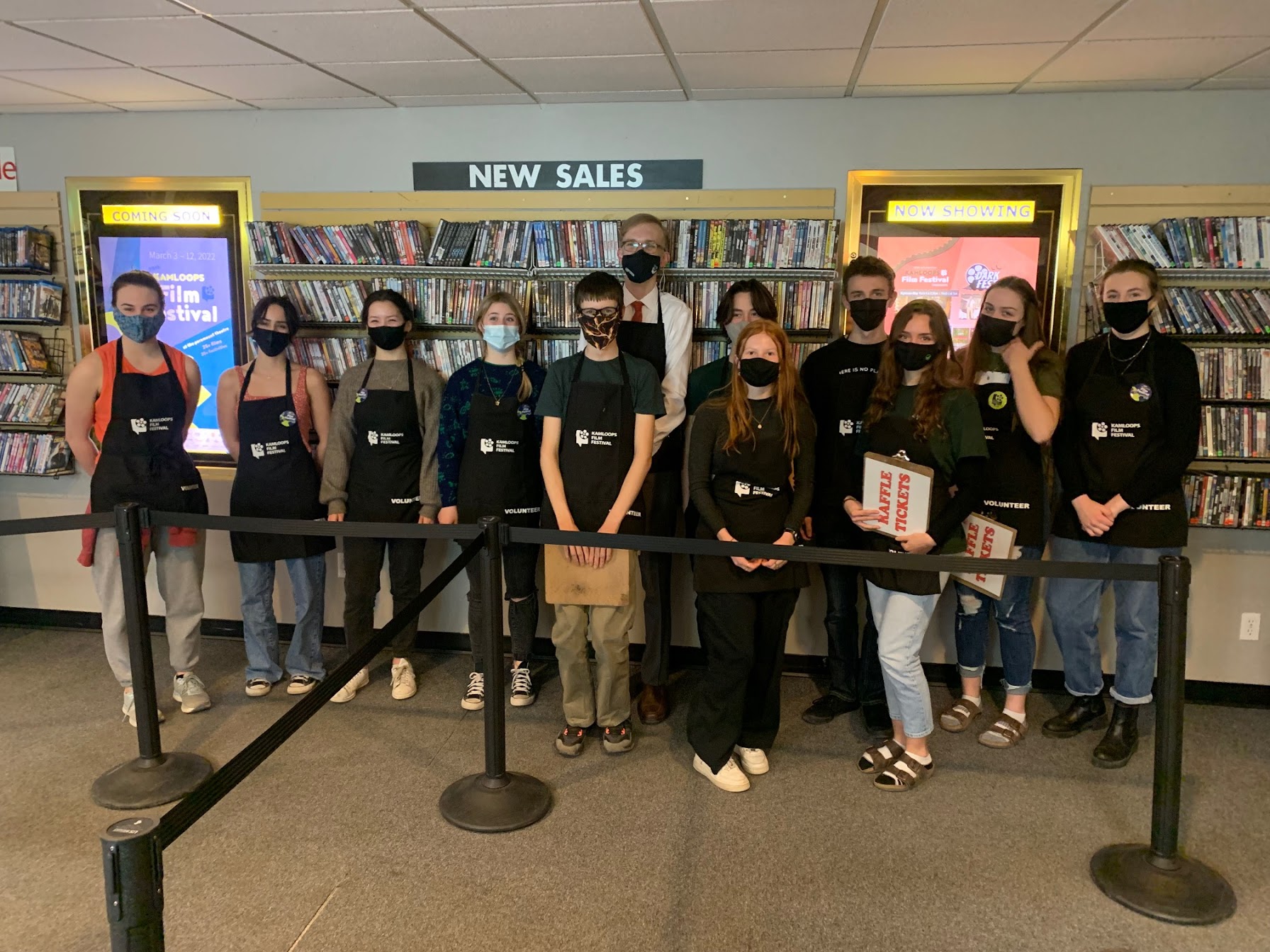
Volunteering at the Kamloops Film Festival’s Sustainability Evening.
Extra-Curricular Knowledge Sharing – 2 points
TRU URIC and SUPER Conference Presentations – Winter 2025
I produced a poster titled “Quantitative PCR assay development for monitoring genes suspected of contributing to PFAS degradation by Gordonia sp. strain NB4-1Y” and presented it at the 2025 TRU Undergraduate Research and Innovation Conference and 2025 TRU Science Undergraduate Poster Exhibition of Research. The poster presentation focused on research completed during my directed study project with Dr. Jonathan Van Hamme regarding environmentally concerning perfluoroalkyl and polyfluoroalkyl substances and their degradation by a microbe, NB4-1Y. Presenting my work at these conferences taught me to communicate scientific topics to a variety of audiences.
In a Nutshell Research Competition – Winter 2025
I presented my work under Dr. Jonathan Van Hamme to investigate the ability of Gordonia sp. strain NB4-1Y to degrade environmentally concerning perfluoroalkyl and polyfluoroalkyl substances, PFAS, in a undergraduate 3-minute thesis competition. The presentation involved delivering an engaging presentation of my research to a non-specialist audience using only one static slide. Through preparing the presentation I was able to learn how to clearly and concisely portray the environmental severity of PFAS contamination to a non-specialist audience.
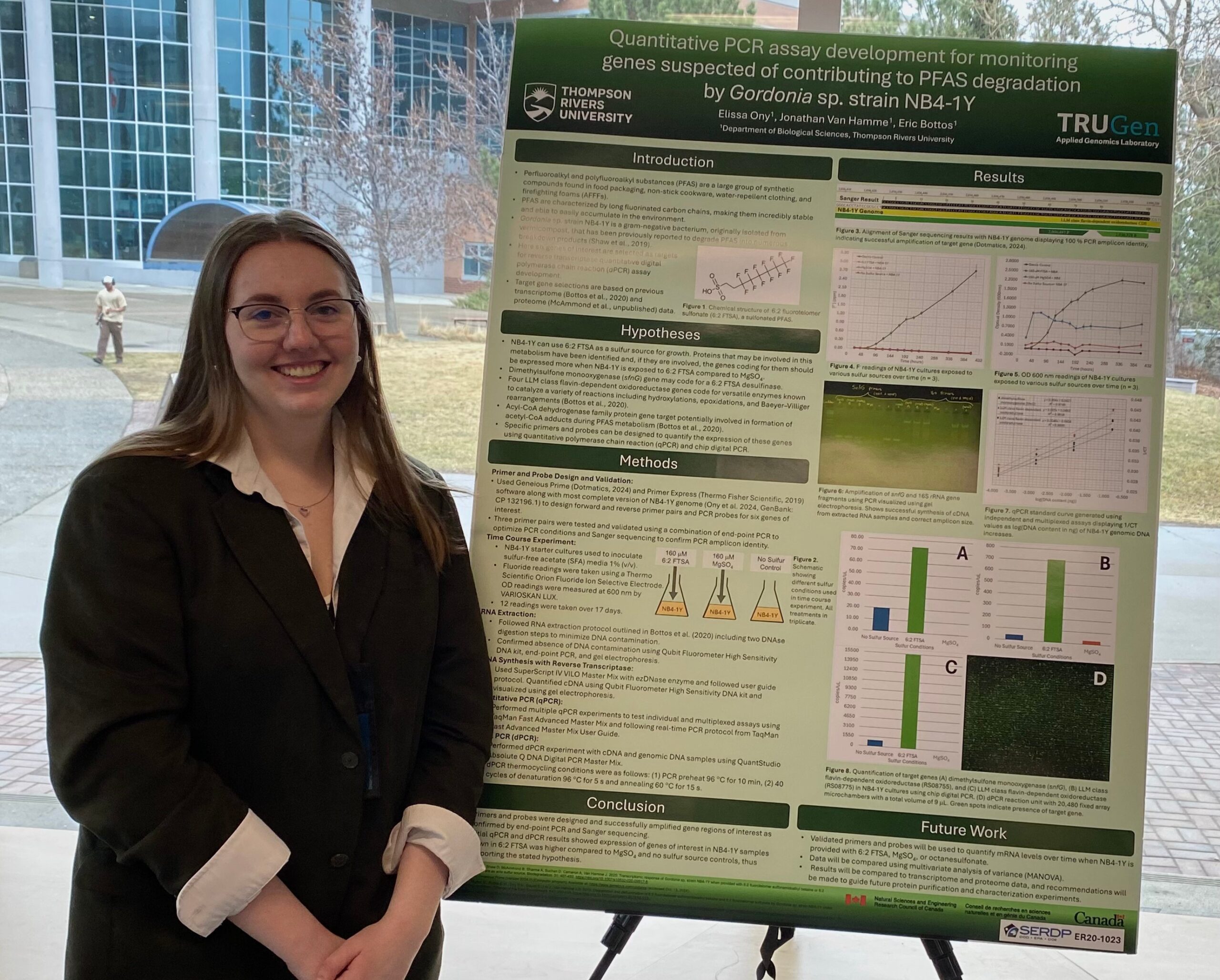
Presented my directed study project at the TRU URIC and SUPER conferences to students and faculty members.
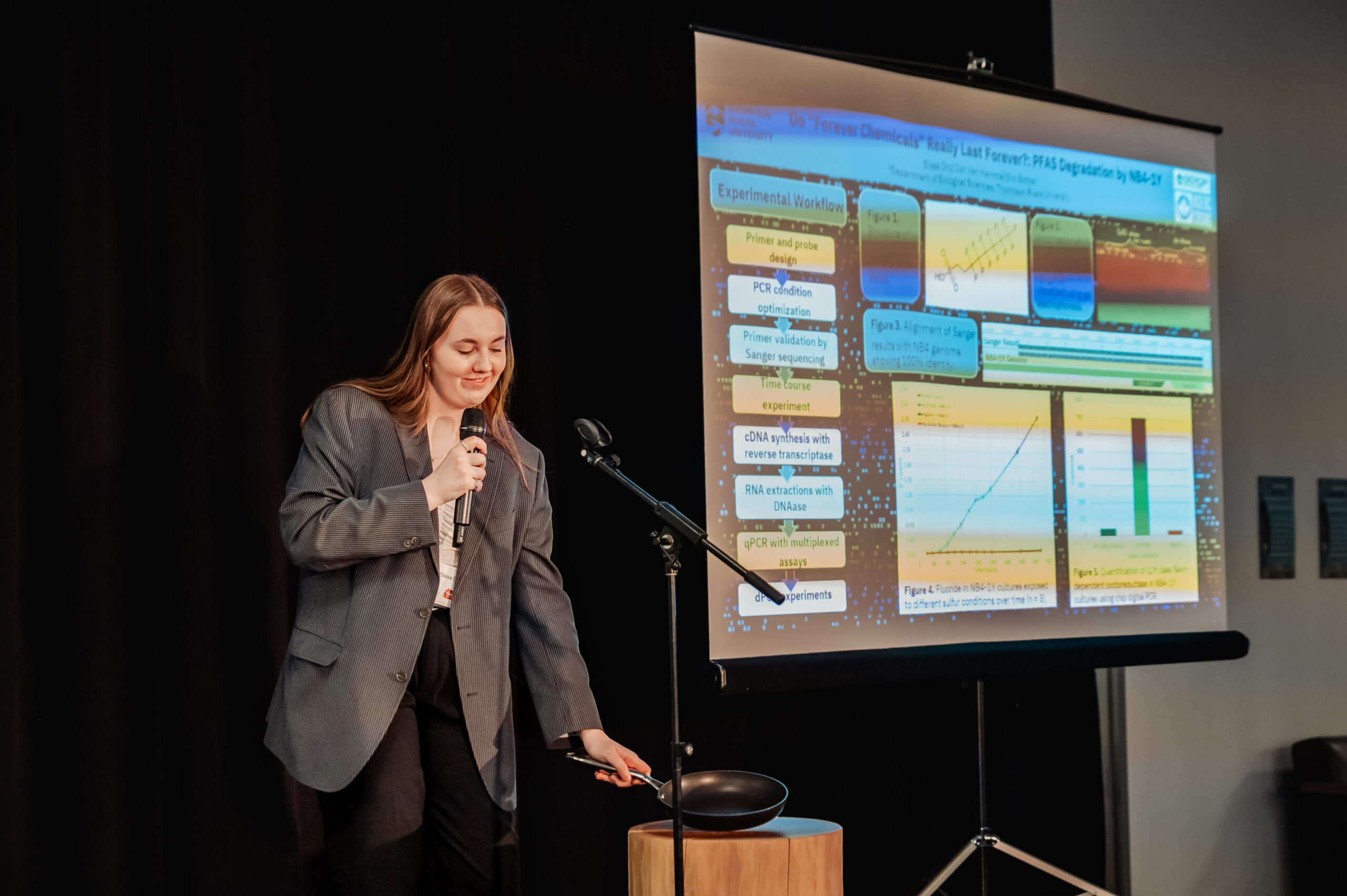
Presented my directed study project at the In a Nutshell Research Competition in under 3 minutes.
Give Back Project
CSM 74th Annual Conference Poster Presentation – Summer 2025
In 2025, I travelled to Montreal, Quebec, Canada to present my directed study project supervised by Dr. Jonathan Van Hamme at the 74th Annual Conference of the Canadian Society of Microbiologists. The poster was titled “Quantitative PCR assay development for monitoring genes suspected of contributing to PFAS degradation by Gordonia sp. strain NB4-1Y” and presented orally at the conference. The experience allowed me to disseminate my research and network with other researchers specializing in PFAS. During the conference, I was also able to attend various lectures and seminars focused on cutting edge microbiology with many of the talks centered on microbial communities from thawing permafrost in the Artic and Antarctic due to the effects of climate change, emphasizing the importance of environmental sustainability in research. Looking forward, I plan to continue to disseminate my research on PFAS in an accessible manner to experts and non-specialists as the threat of these chemicals to environmental and human health becomes critical.
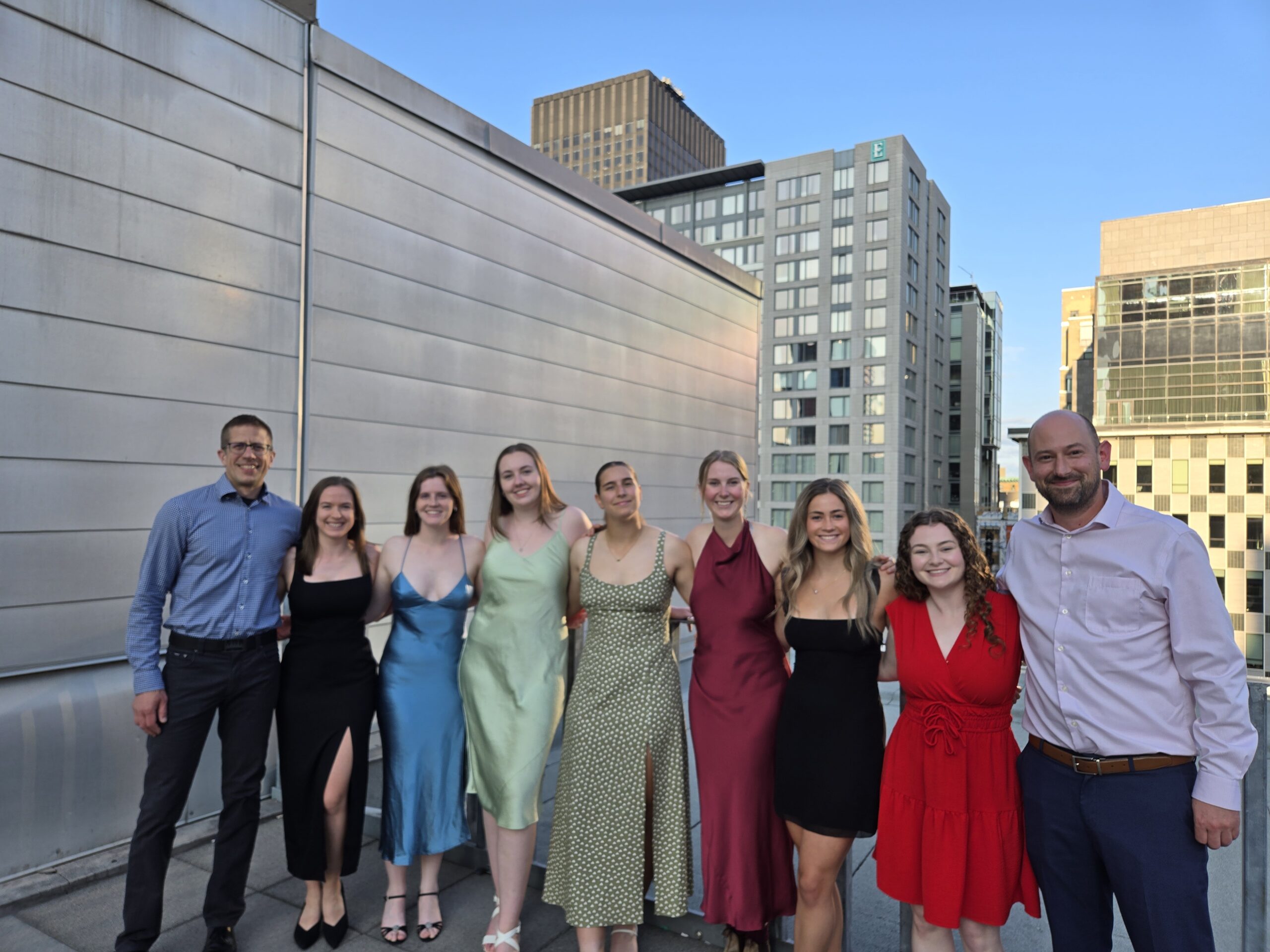
TRU researchers and research supervisors who attended the CSM conference in Montreal.
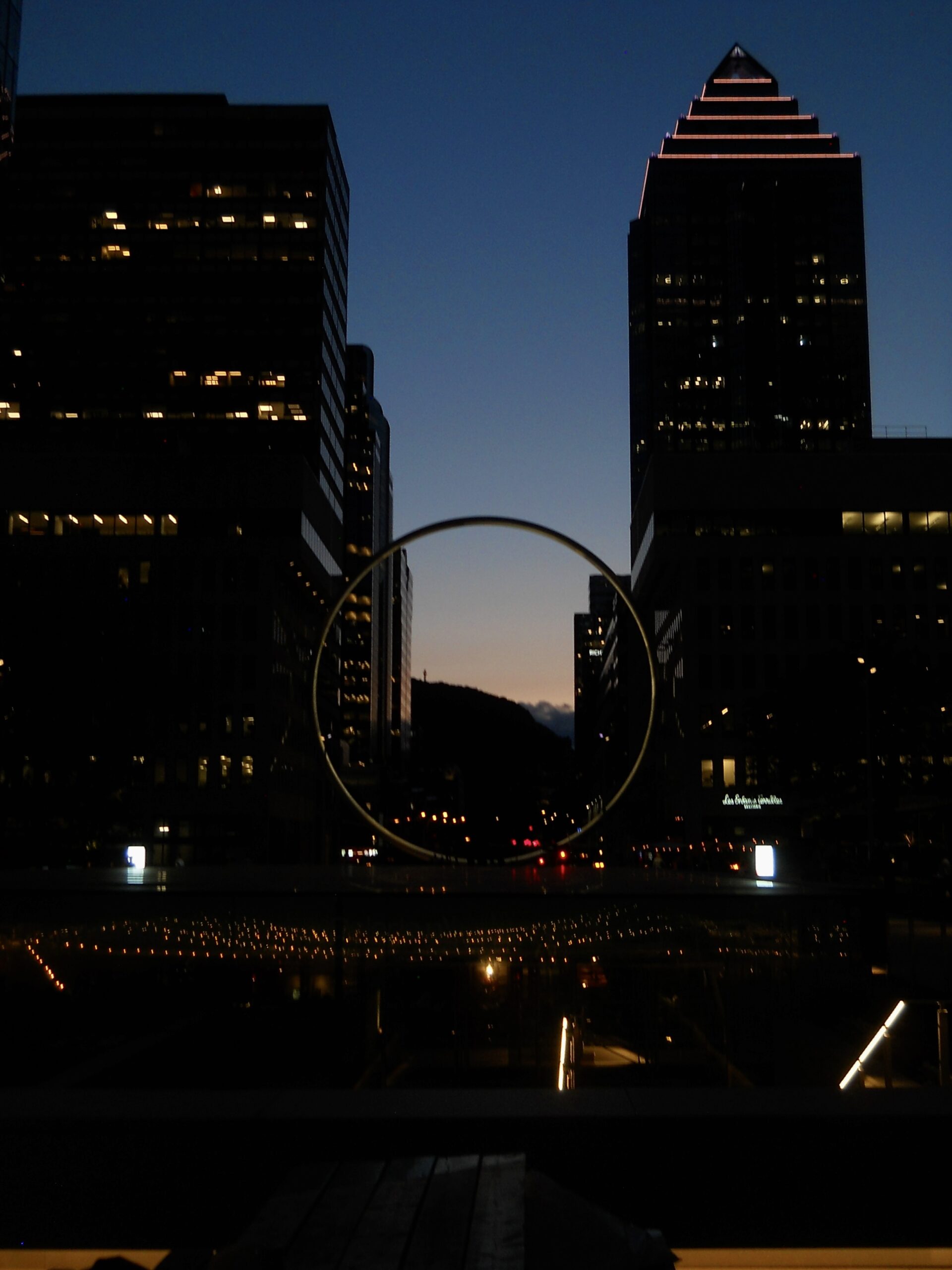
Image of downtown Montreal taken while visiting for the CSM conference.
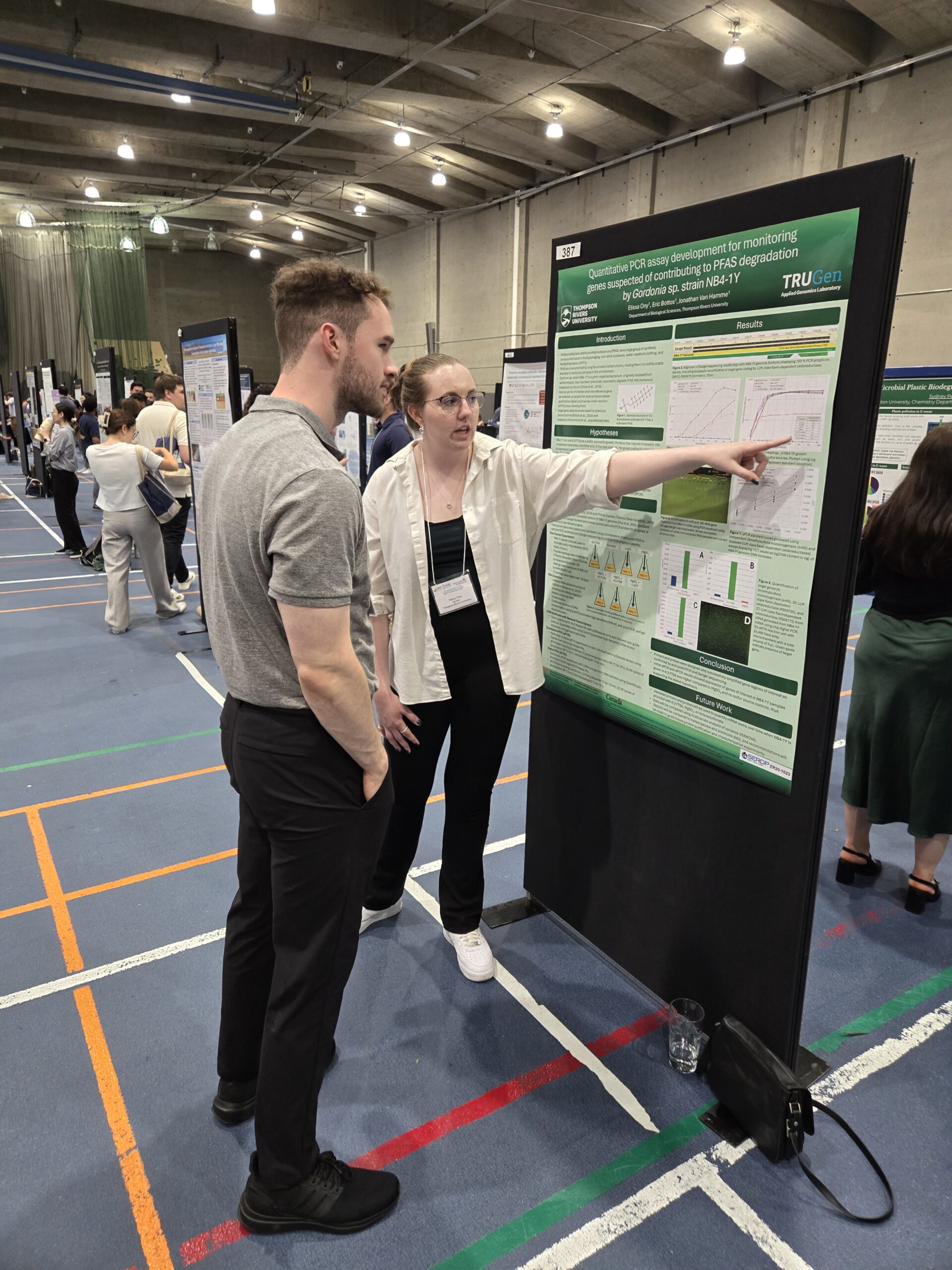
Presenting my research at the 74th annual Canadian Society of Microbiology Conference.